How to A/B Test Marketing Messages Using Social Listening in 2025
TL;DR
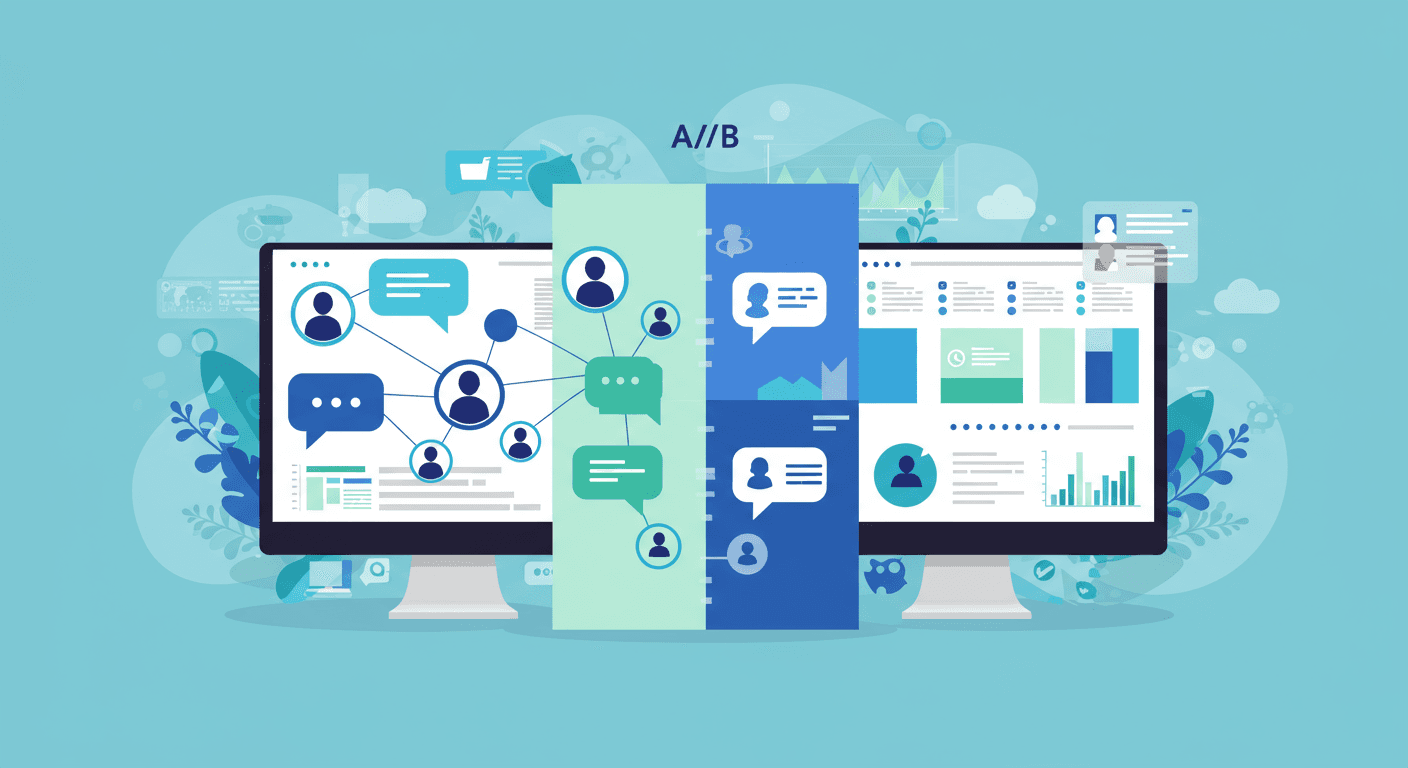
Social listening A/B testing allows brands to test marketing messages by monitoring real-time social conversations across platforms like Reddit, Twitter, and YouTube, analyzing audience sentiment and engagement to optimize messaging before campaign launch. This approach provides authentic feedback from natural social settings, reducing campaign risk and increasing message effectiveness compared to traditional controlled testing environments.
🔑 Key Takeaways
The social listening platform market is projected to grow from $3.2 billion in 2023 to $5.1 billion by 2028, reflecting increasing recognition of social intelligence value for marketing optimization.
Social listening A/B testing provides real-time feedback from authentic conversations, broader audience reach across platforms, and cost-effective testing without paid advertising spend.
Create 2-3 distinct message variations testing specific elements: feature-focused, benefit-focused, or problem-focused approaches to identify what resonates most with your audience.
AI-enhanced sentiment analysis can detect emotions, intent, and context in social responses, providing deeper insights beyond simple engagement metrics like shares and comments.
Platform-specific testing approaches are essential: Reddit for authentic discussions, Twitter for real-time reactions, YouTube for detailed comment analysis, and LinkedIn for B2B audiences.
Measure success through engagement metrics (share rates, comment volume), sentiment analysis (positive/negative percentages), and conversation quality indicators (thread length, expert participation).
Avoid common pitfalls like over-testing without action, ignoring context and timing, focusing only on positive metrics, and assuming results from one platform apply universally.
How to A/B Test Marketing Messages Using Social Listening in 2025
Social listening A/B testing revolutionizes how consumer brands optimize their marketing messages by leveraging real-time social conversations and audience feedback. Instead of relying solely on traditional A/B testing methods, brands can now use social intelligence to test message variations, understand audience sentiment, and refine their messaging strategy before launching campaigns. This approach combines the power of social monitoring with systematic testing to create more effective, resonant marketing communications.
Quick Answer: Social Listening A/B Testing Essentials
Social listening A/B testing involves monitoring social conversations to evaluate different message variations, analyzing audience reactions across platforms like Reddit, Twitter, and YouTube, and using this data to optimize marketing communications. The process includes setting up social monitoring for message variants, tracking engagement and sentiment metrics, and iterating based on real-world social feedback.
The Growing Importance of Social Listening for Message Testing
The social listening platform market is projected to grow from USD 3.2 billion in 2023 to USD 5.1 billion by 2028; it is expected to grow at a CAGR of 9.7% from 2023 to 2028, according to MarketsandMarkets (2023). This explosive growth reflects the increasing recognition that social conversations provide invaluable insights for marketing optimization.
Traditional A/B testing often occurs in controlled environments that may not reflect real-world audience behavior. Social listening A/B testing addresses this limitation by:
Real-time feedback collection from authentic social conversations
Broader audience reach across multiple social platforms
Contextual understanding of how messages perform in natural settings
Cost-effective testing without paid advertising spend
Sentiment analysis beyond simple engagement metrics
Setting Up Your Social Listening A/B Testing Framework
1. Define Your Testing Objectives
Before launching social listening A/B testing, establish clear objectives:
Message clarity: Which version communicates your value proposition more effectively?
Emotional resonance: Which messaging tone generates stronger positive sentiment?
Call-to-action effectiveness: Which CTA drives more meaningful engagement?
Audience segmentation: How do different demographics respond to message variations?
2. Create Message Variations
Develop 2-3 distinct message variations that test specific elements:
Variation A: Feature-focused "Our new productivity app saves you 2 hours daily with AI-powered task management"
Variation B: Benefit-focused "Finally, reclaim your evenings and weekends with smarter task management"
Variation C: Problem-focused "Tired of endless to-do lists that never get shorter? We've got the solution"
3. Select Testing Platforms
Choose social platforms based on where your target audience is most active:
Reddit: Ideal for in-depth discussions and authentic feedback
Twitter: Perfect for real-time reactions and viral potential
YouTube: Excellent for video content and comment analysis
LinkedIn: Best for B2B messaging and professional audiences
Advanced Social Listening A/B Testing Strategies
Smart Community Discovery for Targeted Testing
Use advanced social listening tools to identify niche communities where your target audience congregates. This approach ensures your message testing reaches the most relevant audiences:
Identify relevant subreddits where your customers discuss related topics
Monitor Twitter hashtags and conversations in your industry
Track YouTube channels and comment sections in your niche
Analyze LinkedIn groups for professional audiences
AI-Enhanced Sentiment Analysis
Modern social listening platforms leverage AI to provide deeper insights into message performance:
Emotion detection: Understanding whether messages evoke joy, trust, or excitement
Intent analysis: Identifying whether conversations lead to purchase consideration
Context understanding: Recognizing sarcasm, irony, or nuanced reactions
Trend identification: Spotting emerging themes in audience responses
Measuring Success: Key Metrics for Social Listening A/B Testing
Engagement Metrics
Track quantitative engagement across message variations:
Share rates: Which messages get shared more frequently?
Comment volume: Which versions generate more discussion?
Save/bookmark rates: Which messages users want to reference later?
Click-through rates: Which versions drive more traffic to your content?
Sentiment Analysis Metrics
Analyze qualitative feedback through sentiment scoring:
Positive sentiment percentage: Overall favorable reactions
Negative sentiment triggers: Specific elements causing negative responses
Neutral to positive conversion: Messages that shift opinion favorably
Sentiment intensity: Strength of emotional reactions
Conversation Quality Indicators
Evaluate the depth and value of generated conversations:
Thread length: Longer discussions often indicate higher engagement
Question generation: Messages that prompt audience questions
User-generated content: Variations that inspire audience creativity
Expert participation: Industry professionals joining conversations
Platform-Specific Testing Approaches
Reddit A/B Testing Strategy
Reddit's community-driven nature makes it ideal for authentic message testing:
Best Practices:
Test messages in relevant subreddits during peak activity hours
Monitor both post performance and comment sentiment
Analyze cross-posts to understand message virality
Track long-term discussion evolution
Example Implementation: Post different message variations in r/productivity and r/entrepreneur, then monitor:
Upvote ratios and comment sentiment
Cross-posting to other relevant communities
User questions and follow-up discussions
Moderator and community expert responses
Twitter Testing Methodology
Twitter's real-time nature provides immediate feedback on message performance:
Testing Framework:
Use different hashtag combinations for each variation
Monitor retweet patterns and quote tweet sentiment
Track mention volume and context
Analyze thread development and user engagement
YouTube Comment Analysis
YouTube comments offer rich, detailed feedback on message variations:
Analysis Approach:
Test different video descriptions or pinned comments
Monitor comment sentiment and engagement patterns
Track subscriber growth and retention metrics
Analyze comment thread discussions and user questions
Leveraging AI Copilot for Enhanced Testing
Modern social listening platforms offer AI-powered assistance for more sophisticated testing:
Automated Pattern Recognition
AI copilots can identify subtle patterns in audience responses:
Language preferences: Formal vs. casual tone effectiveness
Timing optimization: Best posting times for each message type
Audience segmentation: Different messages for different demographics
Content format preferences: Text, video, or image-based messaging
Predictive Analytics
Use AI to forecast message performance before full deployment:
Sentiment prediction: Likely audience reactions to new messages
Engagement forecasting: Expected reach and interaction rates
Risk assessment: Potential negative reaction identification
Optimization suggestions: AI-recommended message improvements
Real-World Implementation: Case Study Approach
E-commerce Brand Message Testing
Scenario: An online fitness equipment company testing product launch messages
Message Variations:
A: "Revolutionary home gym equipment for serious athletes"
B: "Transform your living room into a professional fitness studio"
C: "Finally, gym-quality workouts without the gym membership"
Social Listening Results:
Reddit: Variation C generated 40% more positive comments in r/homegym
Twitter: Variation B had highest retweet rate among fitness influencers
YouTube: Variation A resonated best in professional athlete comment sections
Optimization Decision: Combine elements from all three for final campaign messaging
SaaS Company Messaging Optimization
Testing Focus: Value proposition clarity for project management software
Methodology:
Monitor LinkedIn discussions about project management challenges
Test different value propositions in relevant professional groups
Analyze comment sentiment and engagement patterns
Track conversion from social engagement to website visits
Key Insights:
Problem-focused messaging generated 60% more meaningful discussions
Feature lists received lower engagement than benefit statements
Industry-specific examples increased relevance and sharing
Common Pitfalls and How to Avoid Them
Over-Testing Without Action
Problem: Collecting extensive data without implementing insights Solution: Set clear decision criteria and testing timelines
Ignoring Context and Timing
Problem: Testing messages without considering current events or trends Solution: Monitor broader social conversations and trending topics
Focusing Only on Positive Metrics
Problem: Overlooking valuable negative feedback Solution: Analyze criticism for message improvement opportunities
Platform Bias
Problem: Assuming results from one platform apply universally Solution: Test across multiple platforms and audience segments
Advanced Analytics and Reporting
Creating Comprehensive Testing Reports
Document your social listening A/B testing results with:
Executive Summary:
Key findings and recommended actions
Performance comparison across message variations
ROI impact and business implications
Detailed Analysis:
Platform-specific performance metrics
Audience segment breakdowns
Sentiment analysis deep-dives
Competitive comparison insights
Implementation Roadmap:
Recommended message optimizations
Testing schedule for future campaigns
Platform-specific deployment strategies
Long-term Performance Tracking
Establish ongoing monitoring to track message performance over time:
Seasonal variations: How messages perform across different times of year
Trend adaptation: Adjusting messages based on evolving social conversations
Competitive response: Monitoring how competitors react to your messaging
Audience evolution: Tracking changing preferences and language
Future-Proofing Your Social Listening A/B Testing Strategy
Emerging Platform Integration
Stay ahead of social media evolution by:
Testing on emerging platforms like TikTok, Clubhouse, or new social networks
Adapting to algorithm changes on established platforms
Exploring new content formats like audio, AR, or interactive media
Monitoring generational shifts in platform preferences
Privacy-Conscious Testing Methods
As privacy regulations evolve, ensure your testing methods remain compliant:
Anonymized data collection for audience insights
Transparent testing practices that respect user privacy
Consent-based monitoring where required by platform policies
Ethical data usage that prioritizes user value
Conclusion: Transforming Marketing Through Social Intelligence
The global social listening platform market is projected to reach USD 3.92 billion by 2025, according to Grand View Research (2021), reflecting the critical role social intelligence plays in modern marketing strategy. Social listening A/B testing represents the evolution of traditional message testing, offering brands unprecedented insights into authentic audience reactions and preferences.
By implementing systematic social listening A/B testing, consumer brands can:
Reduce campaign risk through pre-launch message validation
Increase engagement rates with audience-optimized messaging
Accelerate iteration cycles with real-time feedback loops
Build stronger customer connections through resonant communication
The key to success lies in combining sophisticated social listening tools with strategic testing frameworks, AI-enhanced analysis, and commitment to continuous optimization. As social conversations continue to shape consumer behavior, brands that master social listening A/B testing will gain significant competitive advantages in message effectiveness and audience engagement.
Ready to transform your marketing message testing with social intelligence? Start by identifying the social communities where your customers are most active, then systematically test your messaging variations to discover what truly resonates with your audience.
Frequently Asked Questions
How long should I run a social listening A/B test to get reliable results?
Run tests for at least 2-4 weeks to account for different posting times, audience activity patterns, and social media algorithm variations. Monitor daily engagement patterns and extend testing if you're seeing inconsistent results or if external events (holidays, news cycles) might be affecting audience behavior.
What's the minimum sample size needed for meaningful social listening A/B test results?
Aim for at least 100-200 meaningful interactions (comments, shares, saves) per message variation across all platforms combined. Focus on engagement quality over quantity - 50 detailed comments with sentiment analysis provide more valuable insights than 500 simple likes or reactions.
How do I handle negative feedback during social listening A/B testing?
Negative feedback is valuable data for message optimization. Analyze criticism patterns to identify specific message elements causing negative reactions, then create refined variations addressing these concerns. Use negative sentiment as a filter to eliminate ineffective messaging before full campaign launch.
Can I use social listening A/B testing for highly regulated industries like healthcare or finance?
Yes, but focus on testing general messaging approaches, tone, and educational content rather than specific claims or offers. Monitor discussions about industry challenges and pain points, then test how different educational or awareness messages resonate while ensuring all content meets regulatory compliance requirements.
What tools do I need to implement social listening A/B testing effectively?
You need social listening platforms for monitoring conversations, sentiment analysis tools for AI-enhanced insights, and analytics dashboards for tracking engagement metrics. Many comprehensive platforms like Brandwatch, Sprout Social, or Hootsuite combine these capabilities, though you can start with free tools like Google Alerts and manual platform monitoring for basic testing.